Stories of Wartime Evacuees
The idea for this book grew out of a conversation I had with a man who had grown up as an evacuee. He challenged me to look at the impact of evacuation on a generation of children and to explode some of the myths that have developed around the subject and which are perpetuated in literature and the media. As usual I found myself unable to resist the challenge. My first surprise came when I revisited my own family’s story and realised that my father had, in the strict sense of the meaning, been ‘evacuated’. He was sent with his school from the Wirral to the Lake District and spent a very happy couple of years living near Ullswater. He certainly did not fit my picture of a typical evacuee and my research led me to realise that of the 3,500,000 children evacuated in Britain, less than half had been sent away at the beginning of the war with a luggage label pinned to their coats.
As I got deeper into the research for When the Children Came Home it became clear that the picture painted of evacuation that we have become familiar with is far from the whole story. There were four phases of evacuation in Britain and many minor movements of children as families decided to send sons and daughters away or bring them home based on decisions that did not always reflect the passage of history.
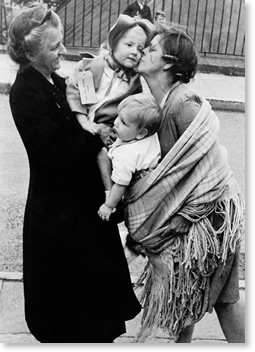
©Imperial War Museum HU 0326234
Therefore rather than being one large, homogenous, organised evacuation, the picture is more interesting. As are the reactions to it. Some children – a sizeable majority – had a wonderful time and speak today with warmth and enthusiasm about the generous villagers and country families who took them into their homes and treated them kindly while they were away from their own parents. To underline this, hundreds, if not thousands, of children were much later on beneficiaries of foster parents’ wills.
Even if initially some children were homesick or unsettled, those who settled in well had a superb experience. Others did not and these are the stories that make the headlines and are of more interest, perhaps, to the press and general public. What this book seeks to do is to put these unhappy experiences into the context of the overall evacuation story and attempts to redress the balance.
It is perhaps surprising that some children, especially those who had been very happy with their foster families, found it more difficult coming home than they had done leaving in the first place. This is understandable, not least as they were of course older when they returned to their natural parents. Some children never returned whilst others came back briefly, only to leave again and move to live closer to or even with their foster parents again. Almost everyone admitted to some period of readjustment but the majority of children, now adults, were keen to point out that they soon found a way to cope with home life once again.
The message of the book is an upbeat one that celebrates the positive aspects of the evacuation story. However it does not shy away from looking at the more difficult aspects of separation and the impact that had on the long-term well-being of the evacuee children.
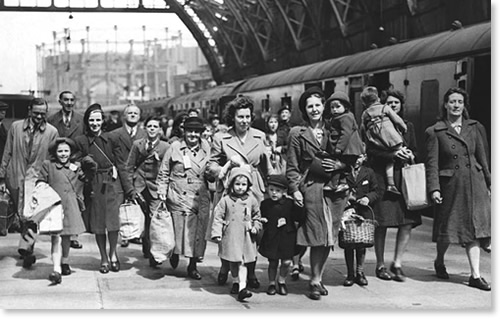
©Hulton-Deutsch Collection/Corbis
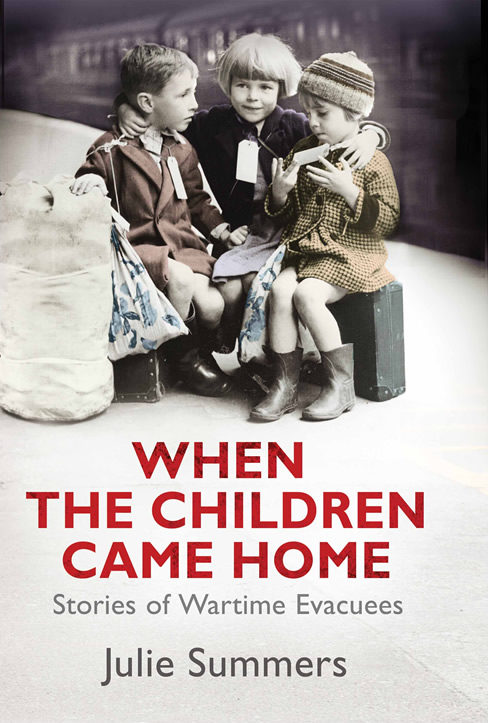
Published 3 March 2011 by Simon & Schuster
ISBN 978-1847377258
“The great glory of When the Children Came Home is that it acknowledges all these tremendous difficulties, but at the same time shows how, more often than not, people of all ages managed to overcome them.”
“Time and again, I found myself so moved by passages in the book that when I tried to read them out to my wife, I had to keep pausing and take deep breaths. As ever, the tales of pure kindness are the most powerful of all.”
Craig Brown, Mail on Sunday,
March 2011
(Chosen as Book of the Week – awarded 5 Stars)
“A brilliant new book”
The Daily Express March 2011
“Julie Summers has put together a fascinating range of stories about the experiences of evacuees during and after the war, and added one or two tales of her own.”
The Daily Mail, March 2011
“Summers offers a well-rounded portrait of the evacuee experience… The use of interviews, written accounts and memoirs makes for compelling reading. It is another excellent example of oral history.”
The Bookseller, October 2010