The World of Books
When I wrote my first book over a quarter of a century ago it was a full-on physical process. I typed the manuscript on a word processor, took a floppy disc down to the printers in town and paid cash to have the book printed, double spaced, on eighty-gram paper. Three hundred pages, tied up in string, weighed a hefty two kilos. I parcelled it up in a box and sent it by Royal Mail to my editor at Weidenfeld & Nicolson, Ion Trewin. He sent it back three weeks later with glorious hieroglyphics in the margins indicating where he suggested I make changes. That led to another version of the book, draft two, which went through the same process and was sent back to London a month later only to be returned with the copyeditors tweaks and changes. The next time I sent it back it returned in a huge envelope as galley proofs, those magical A3 sheets that lay out the book, two pages at a time, with trim marks in the four corners to show you how big the book will be. As they are so large, galleys are usually folded in half, not with a crease but simply turned over on themselves so they have a glorious undulating shape when you unfold them. Galleys never cease to enchant me. When the book finally arrived through my letter box in October 2000, I held in my hands a solid object which was the sole product of nearly three years of hard work.

Fast forward almost twenty-six years and the whole process of book production and consumption has changed. The research has moved on too, with online access to so much material, some of it highly unreliable, but the writing process for me has not changed. This time, however, I had a co-author, the Everest historian Jochen Hemmleb. He and I fortunately work in a similar manner. I still type my first draft in the same way and I edit now, as I did in the late 1990s, by hand. But once I have made my changes and sent the manuscript off, by pressing ‘send’ on my email, the steps that once bore the idiosyncratic marks of an individual editor now are marked electronically with tracked changes. It is still a creative process, and I love working with editors, proof-readers and, particularly indexers but I do miss the galleys.
There are new steps in book publishing now which have slipped in organically. The first is the e-book which captures between 20 and 30 per cent of the market depending on whether the book is fiction or non-fiction. The second is the audiobook. This accounts for somewhere between 9 and 12 per cent of sales and is a growing market. Several of my books have been turned into abridged or dramatized audio versions in the past but only two are full-length audiobooks. A recent conversation with a friend, Helen, who had listened to one of my books and found it less than satisfactory, led me to reading The Everest Mystery myself rather than choosing a professional reader. It seemed a bit arrogant to assume I would be able to do it but with a little help from some wonderful friends, I took it on. Over the course of three days in late March, I recorded nine hours and fifty-two minutes of audio with a producer called Dan who took me patiently through the whole process.
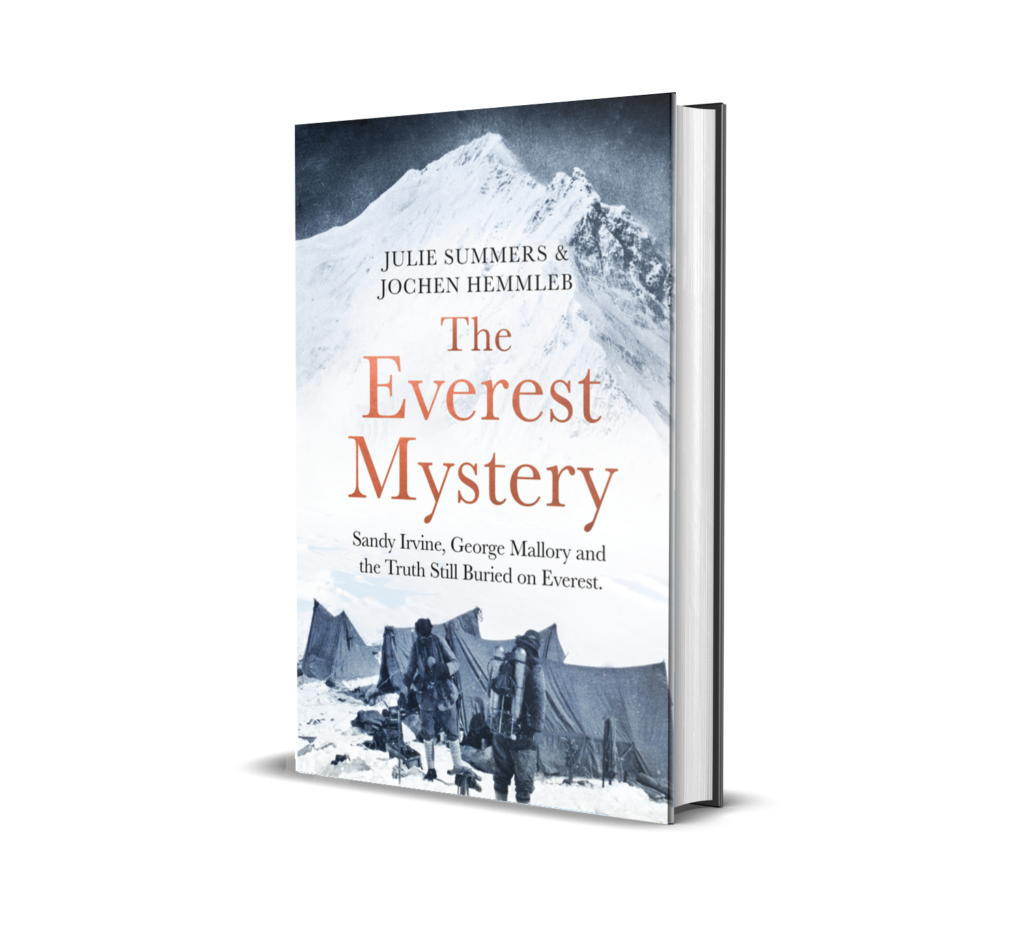
Mindful of Helen’s criticism of pronunciation of foreign words and general delivery, I decided to take some advice. First stop was a tutorial with professional voice coach, Elspeth Morrison, who happens to be one of my oldest friends. We were at school together. I recorded an excerpt for her and she critiqued it, which was brilliantly bruising. She also gave me tips on how to warm my voice up, how to look after it so that it didn’t get tired (don’t talk too much), what to drink and eat, and how to sound as natural as possible. That was the most difficult bit, after not talking too much.
The Everest Mystery, it turns out on closer inspection, has names in over a dozen languages, including Chinese, Tibetan, Russian and two texts in Latin. Should the Latin be read in the style of the 1920s or in today’s Latin my friendly classics professor from Oxford asked me? That is when I realised I had to take this seriously. With thirty-seven Tibetan names I needed help. Oxford is full of brilliant academics who are generous with their time, and I found Ulrike Roesler, Professor of Tibetan and Himalayan Studies in the Faculty of Asian and Middle Eastern Studies who coached me not only on pronunciation but on the meaning of names. It was fascinating and quite moving to learn about the way Tibetan names arise. Then I had to turn to Chinese, which I found a lot trickier. My nephew is married to a Chinese woman, Lily, who was only too pleased to teach ‘Auntie Beetle’, as I am known, to pronounce names like Luoze, Qu Yinhua and Wang Fuzhou. I suspect she will hear very western versions of the names if she listens to the recording, but I did my best. I surprised the producer by being able to pronounce Ffordd Ddwr and Llandyrnog convincingly. A lifetime of listening to my late father enunciate Welsh names helped greatly in that respect and was a lovely reminder of his phenomenal linguistic abilities.

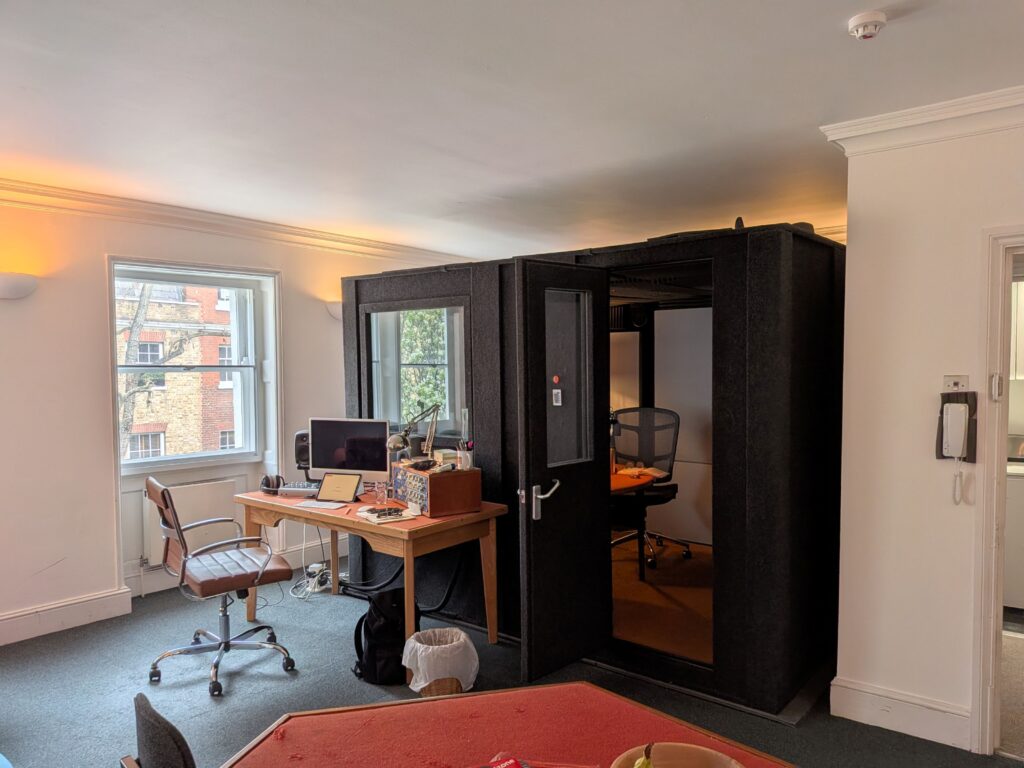
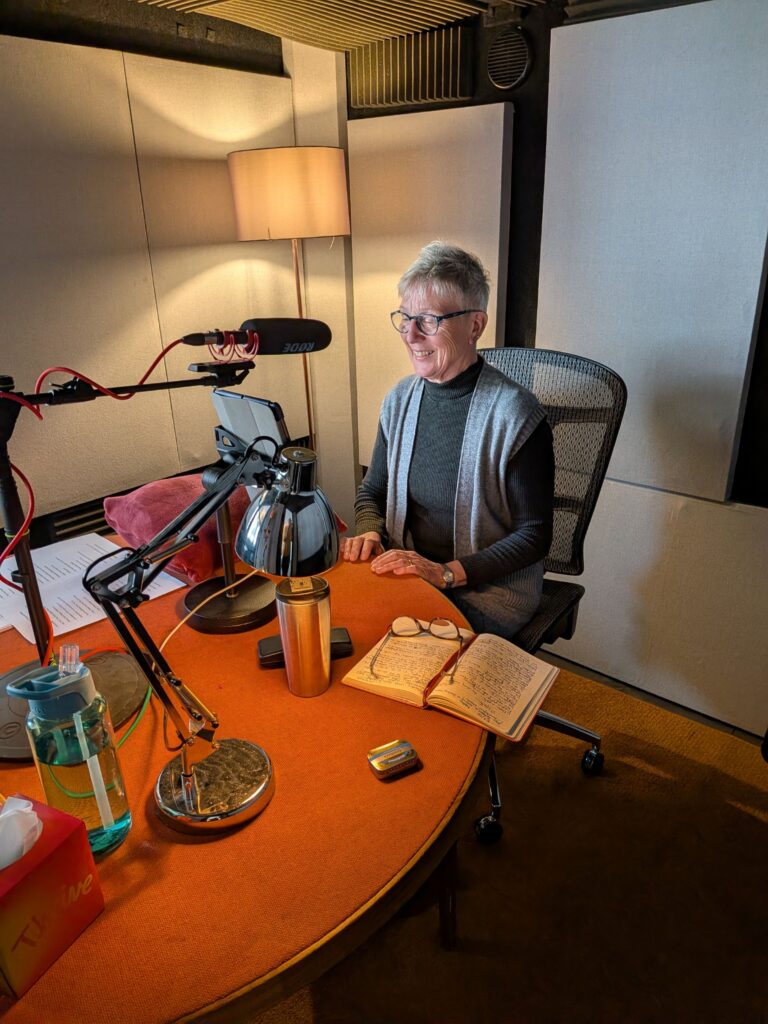
Once settled in the studio in Soho, I set out the tools of my trade for the day: a flask of peppermint tea, a bottle of warmish water, cough sweets and a cushion to place over my tummy to stop any unwanted gurgling interfering with the recording. The studio was a soundproof box with a chair, an iPad and a microphone. Stage fright wasn’t an option. I just had to get on with it. It all went swimmingly until I ate a chocolate ginger biscuit in a break and developed a horrible dry cough. Dan handed me a banana, forbade chocolate from then on, and told me to slow down. Over the next three days I read my way through the book from beginning to end, my cheat sheet of tricky words by my side. By lunchtime on the third day, I had finished the epilogue. All that remained were the credits for the UK and US editions. I stepped out into the spring sunshine and made my way to Euston station, only to find it closed. I would have shouted with rage, but I had lost my voice.
What a fascinating overview of how the two sides of every book – the production, your side, and the consumption, my side – have developed since you began your writing career.
I’m a keen reader and I have thoroughly enjoyed reading many of your books, but I also listen to audiobooks when I’m gardening and driving. The reader’s interpretation can make or break even their own autobiography. It is not difficult to ruin the best of stories.
The Everest Mystery has been a great listen and now I can picture you (and your cushion) sitting and reading your work in the studio. The thorough preparation certainly paid dividends. I became completely immersed in your account of the events and the characters involved in the lead up to and the unfolding of this ultimate human challenge.
Congratulations, Julie.
Thank you very much for that lovely comment. I couldn’t be happier that the reading worked for you. After all, it was you who gave me the courage to take the leap. Thank you, Helen.
Lovely to read this Julie and to see how not only you produce your books but the fascinating off-shoots of knowledge that you need to follow up as a result. I’ve enjoyed reading your books since our first “virtual” meeting about “Jambusters” when I wrote about you, I think for the Manchester Evening News. I watched the subsequent TV series with special interest – just checking that they’d done justice to the spotlight you shone on this difficult but heroic time. I also loved “When the Children Came Home” and “Fearless on Everest”, again reviewing and writing about your clever and entertaining style and the fascinating subjects you always choose for your books. Yes, just like in journalism, there are many changes in how our work is produced and what happens to it but there is a core of pure truth there that we all aim for in our work and, fortunately, that often resonates with those who read it. Just keep up the good work! Best wishes, Angela
Thank you so much for such a thoughtful and generous comment. I’m really touched. It’s been an interesting time recently but in all this, as you say, we are just after the truth. Great stories from real life are often more fascinating than fiction and I greatly enjoy finding them in the course of my research, as I am doing on my new book about the women of D-Day. Very many thanks again
I love your blog! I do have a vested interest as your sister and ADORE the photo of Daddy! Such a handsome fellow. It is fascinating to read about the process and how it has changed so dramatically over the years. Fortunately the magic has not disappeared, just changed.
And yes, listening to the audio book read by you is so much better. It is far more personal and has far more meaning.
Well done you and here is to astronomical sales and huge success. Xx
Thank you, my darling sister. I’m sure it’s hugely unprofessional to reply to siblings comments but, do you know what, I don’t care. And that you were so thrilled to see a picture of our darling father made me smile as much as it did me posting it. Lots of unprofessional but heartfelt love xxx