The World of Books

The World of Books

When I wrote my first book over a quarter of a century ago it was a full-on physical process. I typed the manuscript on a word processor, took a floppy disc down to the printers in town and paid cash to have the book printed, double spaced, on eighty-gram paper. Three hundred pages, tied up in string, weighed a hefty two kilos. I parcelled it up in a box and sent it by Royal Mail to my editor at Weidenfeld & Nicolson, Ion Trewin. He sent it back three weeks later with glorious hieroglyphics in the margins indicating where he suggested I make changes. That led to another version of the book, draft two, which went through the same process and was sent back to London a month later only to be returned with the copyeditors tweaks and changes. The next time I sent it back it returned in a huge envelope as galley proofs, those magical A3 sheets that lay out the book, two pages at a time, with trim marks in the four corners to show you how big the book will be. As they are so large, galleys are usually folded in half, not with a crease but simply turned over on themselves so they have a glorious undulating shape when you unfold them. Galleys never cease to enchant me. When the book finally arrived through my letter box in October 2000, I held in my hands a solid object which was the sole product of nearly three years of hard work.

Fast forward almost twenty-six years and the whole process of book production and consumption has changed. The research has moved on too, with online access to so much material, some of it highly unreliable, but the writing process for me has not changed. This time, however, I had a co-author, the Everest historian Jochen Hemmleb. He and I fortunately work in a similar manner. I still type my first draft in the same way and I edit now, as I did in the late 1990s, by hand. But once I have made my changes and sent the manuscript off, by pressing ‘send’ on my email, the steps that once bore the idiosyncratic marks of an individual editor now are marked electronically with tracked changes. It is still a creative process, and I love working with editors, proof-readers and, particularly indexers but I do miss the galleys.

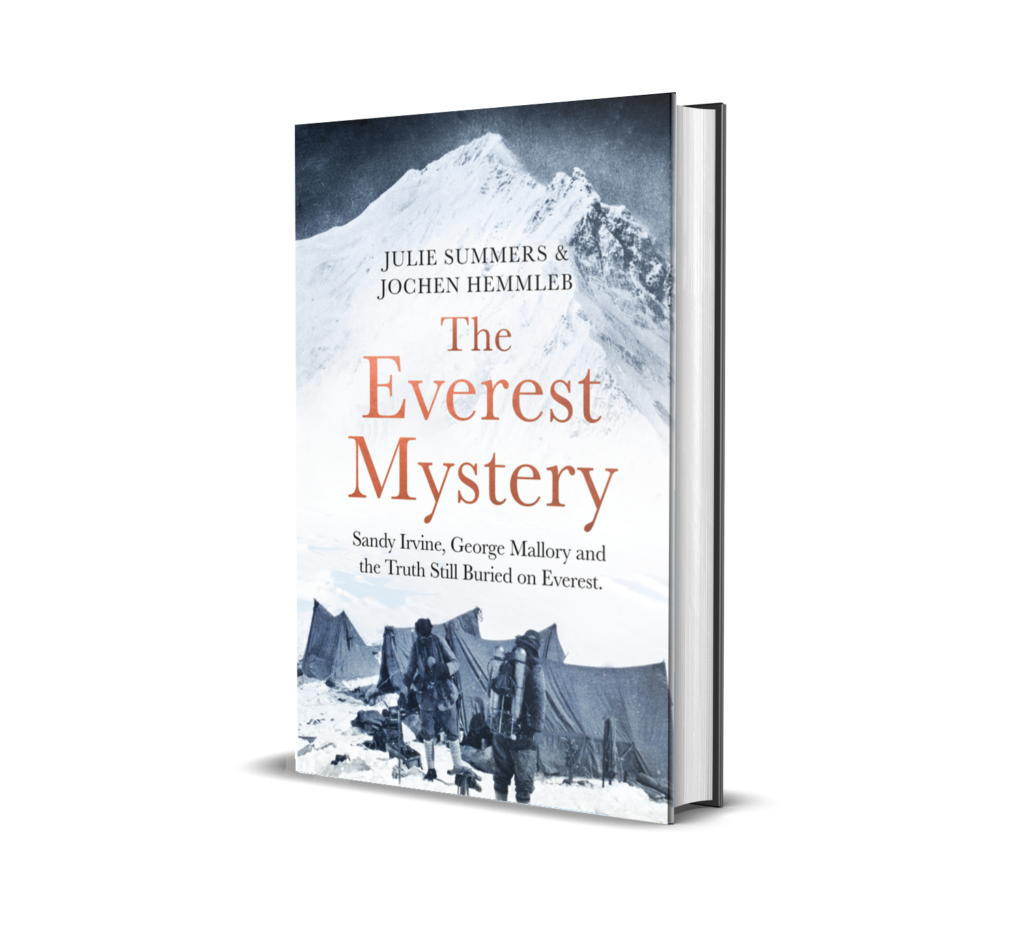
There are new steps in book publishing now which have slipped in organically. The first is the e-book which captures between 20 and 30 per cent of the market depending on whether the book is fiction or non-fiction. The second is the audiobook. This accounts for somewhere between 9 and 12 per cent of sales and is a growing market. Several of my books have been turned into abridged or dramatized audio versions in the past but only two are full-length audiobooks. A recent conversation with a friend, Helen, who had listened to one of my books and found it less than satisfactory, led me to reading The Everest Mystery myself rather than choosing a professional reader. It seemed a bit arrogant to assume I would be able to do it but with a little help from some wonderful friends, I took it on. Over the course of three days in late March, I recorded nine hours and fifty-two minutes of audio with a producer called Dan who took me patiently through the whole process.
Mindful of Helen’s criticism of pronunciation of foreign words and general delivery, I decided to take some advice. First stop was a tutorial with professional voice coach, Elspeth Morrison, who happens to be one of my oldest friends. We were at school together. I recorded an excerpt for her and she critiqued it, which was brilliantly bruising. She also gave me tips on how to warm my voice up, how to look after it so that it didn’t get tired (don’t talk too much), what to drink and eat, and how to sound as natural as possible. That was the most difficult bit, after not talking too much.
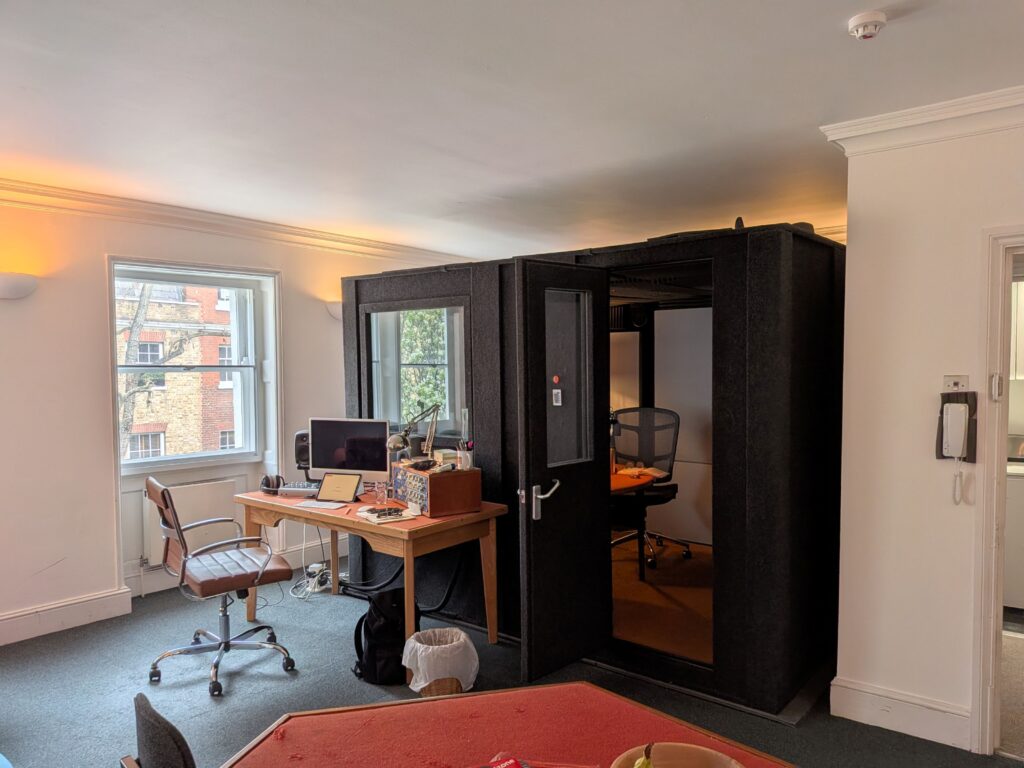
The Studio in Soho
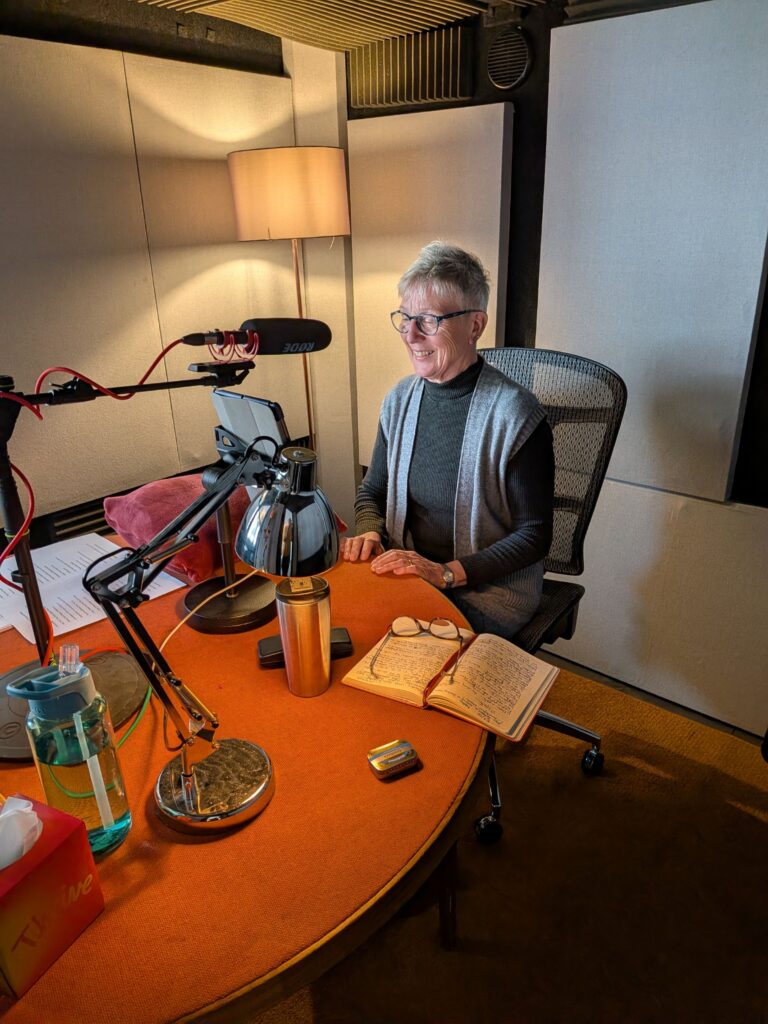
My home for two and a half days in March. Spot the cushion on my right and the long list of difficult to pronounce names

The Everest Mystery, it turns out on closer inspection, has names in over a dozen languages, including Chinese, Tibetan, Russian and two texts in Latin. Should the Latin be read in the style of the 1920s or in today’s Latin my friendly classics professor from Oxford asked me? That is when I realised I had to take this seriously. With thirty-seven Tibetan names I needed help. Oxford is full of brilliant academics who are generous with their time, and I found Ulrike Roesler, Professor of Tibetan and Himalayan Studies in the Faculty of Asian and Middle Eastern Studies who coached me not only on pronunciation but on the meaning of names. It was fascinating and quite moving to learn about the way Tibetan names arise. Then I had to turn to Chinese, which I found a lot trickier. My nephew is married to a Chinese woman, Lily, who was only too pleased to teach ‘Auntie Beetle’, as I am known, to pronounce names like Luoze, Qu Yinhua and Wang Fuzhou. I suspect she will hear very western versions of the names if she listens to the recording, but I did my best. I surprised the producer by being able to pronounce Ffordd Ddwr and Llandyrnog convincingly. A lifetime of listening to my late father enunciate Welsh names helped greatly in that respect and was a lovely reminder of his phenomenal linguistic abilities.

Any excuse to show a photograph of my wonderful father, Peter

Once settled in the studio in Soho, I set out the tools of my trade for the day: a flask of peppermint tea, a bottle of warmish water, cough sweets and a cushion to place over my tummy to stop any unwanted gurgling interfering with the recording. The studio was a soundproof box with a chair, an iPad and a microphone. Stage fright wasn’t an option. I just had to get on with it. It all went swimmingly until I ate a chocolate ginger biscuit in a break and developed a horrible dry cough. Dan handed me a banana, forbade chocolate from then on, and told me to slow down. Over the next three days I read my way through the book from beginning to end, my cheat sheet of tricky words by my side. By lunchtime on the third day, I had finished the epilogue. All that remained were the credits for the UK and US editions. I stepped out into the spring sunshine and made my way to Euston station, only to find it closed. I would have shouted with rage, but I had lost my voice.
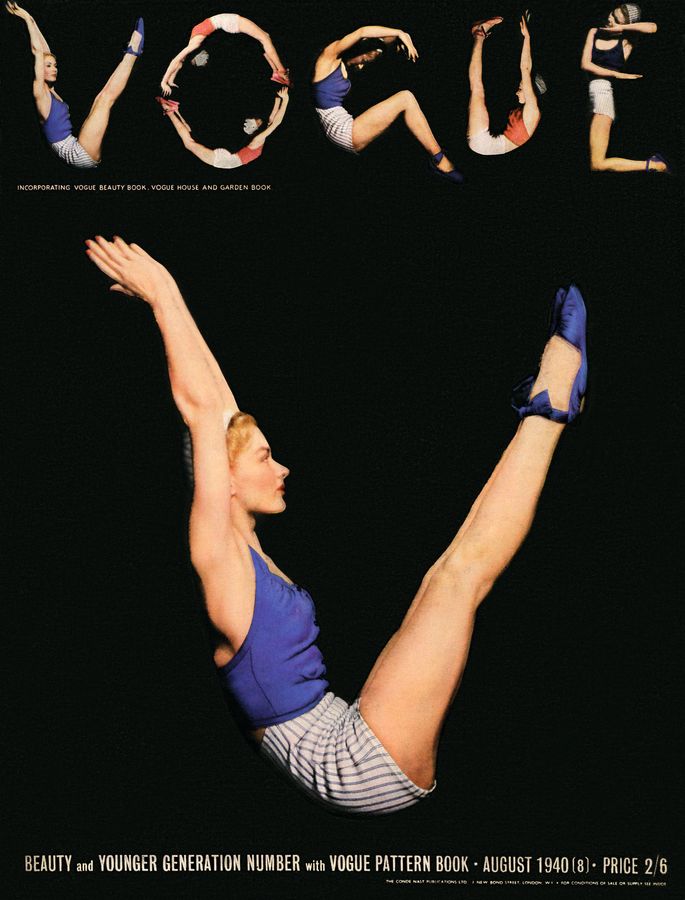
When Worlds Collide

For the first six months of 2024, I was busy and taken up with two projects. The first was the centenary celebration of the disappearance of George Mallory and Sandy Irvine on Mount Everest on 8 June 1924. The second was the completion of my biography of British Vogue which was in the final stages of proofs, and we were looking to pin down the pictures. It was a delightful juxtaposition. I enjoyed flitting between exquisite photoshoots by Nick Knight and Mario Testino in Vogue and the chilly black, white and blue world of the high Himalaya. While the book proofs were being tweaked and the index completed, I took part in several events to mark the Everest 100th anniversary. The first was at Shrewsbury School in February, the day the expedition set off from Liverpool on 29 February 1924. Then a seminar day on 26 April at Merton College, Oxford (Sandy Irvine’s college) on the day he got his first sighting of the mountain from Pang La Pass 100 years ago.

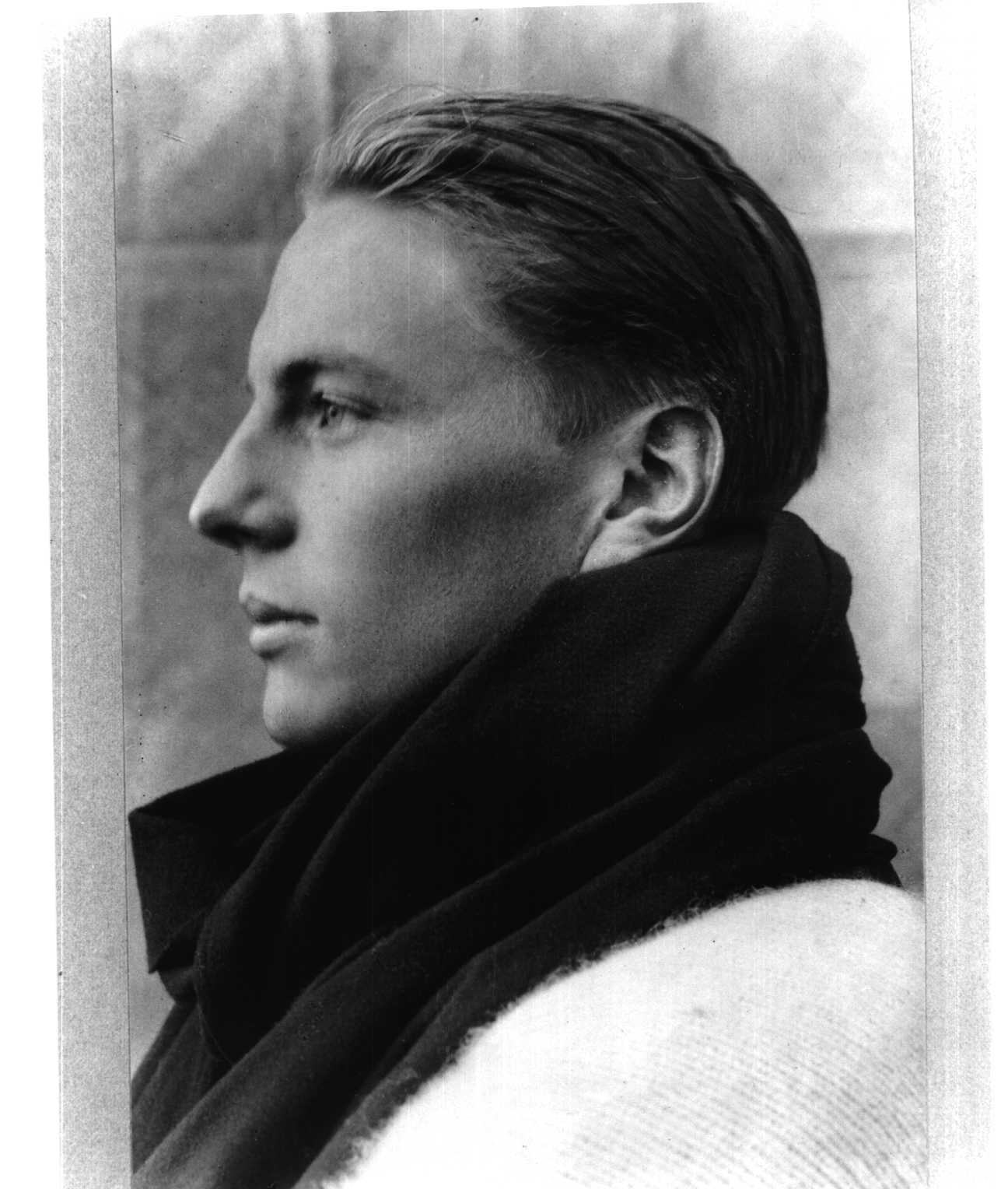
Sandy Irvine 1923 The Warden & Fellows of Merton College, Oxford

And finally the major celebration at the Royal Geographical Society in London, organised by Rebecca Stephens and the Himalayan Trust. This took place on 8 June, the exact date the two climbers were last seen by Captain Noel Odell ‘going strong for the top.’ It was an extraordinary and moving event and we all felt that the centenary of the greatest mountaineering mystery of all time had been well and truly put to bed. I even announced my intention to retire from Everest-related matters.

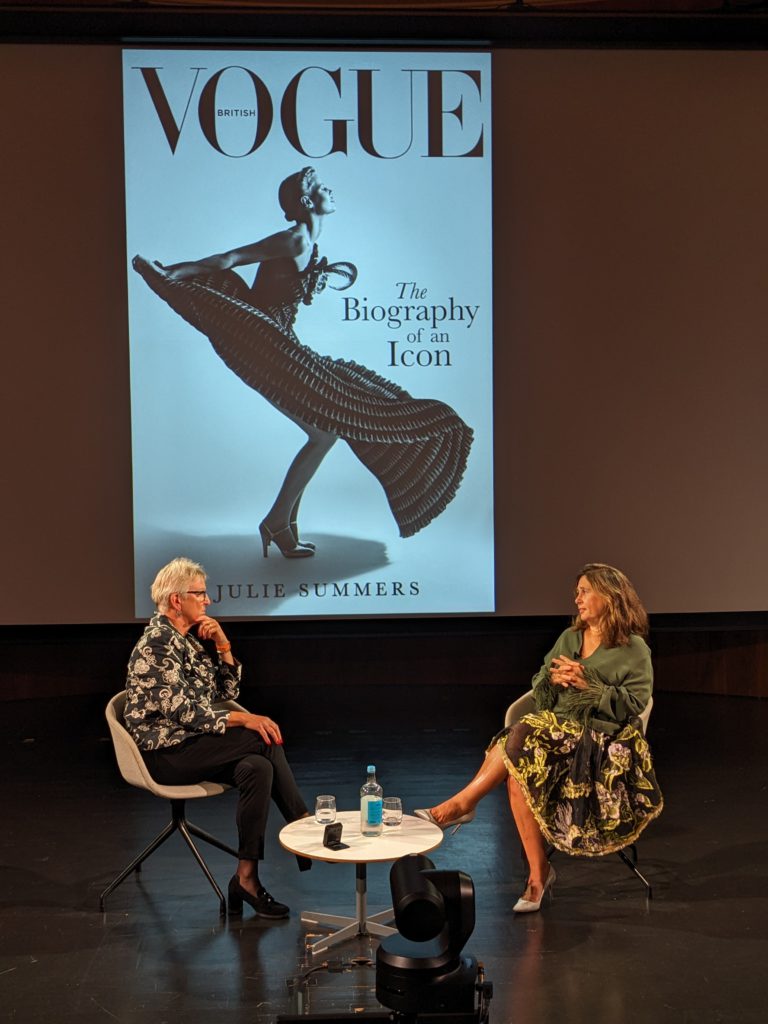
And so I returned to the rarified air of high fashion and Vogue history. Over the summer I finalised the selection of images for the plates section, saw the final proofs off to the setters and then, as readers of this blog will know, I was fortunate enough to see the book coming off the presses on 3 September. After a short but lovely walking holiday in Greece, I returned to a frenzy of pre-publication activity for the Vogue biography. There was a glitzy launch at Iconic Images Gallery in London and a Q&A with former Vogue editor, Alexandra Shulman at the V&A at which we discussed Vogue, clothes and other things that matter.

One of the issues we talked about was how all of us make fashion choices every day, even if we think we are not interested in fashion. We make a decision about whether it’s a jeans or dress day, whether it’s warm enough to wear shorts or a skirt without tights, whether we’re trying to dress to impress or simply to wear clothes appropriate for the task in hand. Our clothes tell others so much about who we are, what we are doing, and in the case of history, to what time period we belong. Audrey Withers, Vogue’s editor in the 1940s and 1950s, said she could date a dress to a season and tell you what was going on at the time politically and economically.

Imagine my surprise when I received a call one morning the following week from a high-altitude filmmaker in Kathmandu who wanted to talk about an old boot he had found in a glacier on Everest a few days earlier. The boot was leather with nails (for grip), meaning it had been used for climbing. There was a thick woollen sock poking out from the boot – brown and cream (café au lait?) which meant the wearer had been clear that he or she wanted to keep their feet warm at altitude. Actually, I knew it was a ‘he’ because no women were on Everest in the era of nailed leather boots. It matched in type, design and weight, the boot found on George Mallory’s body in 1999. Could it possibly be a boot belonging to Sandy Irvine? If so, that would blow all the most recent theories of the Chinese removing Irvine’s body from the mountain to smithereens. How could we possibly prove it? Simple, as it turns out. Stitched perfectly onto the sock was a Cash’s name tape: A. C. IRVINE.

This incredible find, made by climber/filmmaker Jimmy Chin when he was on his way down from the upper mountain, has opened up the whole mystery of Mallory and Irvine for the second time. And in the centenary year, a quarter of a century after Mallory’s body was found by Chin’s friend and mentor, Conrad Anker, in May 1999. The fact that Chin found only a boot and sock (with the foot too) is tantalising and begs the question as to what happened and where is the rest of Sandy Irvine’s body. I have studied the mystery of Mallory and Irvine for nearly 30 years, and I have spoken to many climbers, filmmakers, mountaineering historians, glaciologists and artists. I know that objects caught in glaciers are moved, crushed and spat out by the slow-moving rivers of ice. Andy Parkin, an artist in Chamonix, specialises in sculptures created from found and recycled objects, often crushed and changed by the Mont Blanc glacier. I knew from conversations with him how things can reappear years after they fell into the ice.

Mallory replica clothing recreated by Mike Parsons & Mary Rose from fragments found on his body in 1999 (Mountain Heritage Trust)

Those who know the story of Mallory and Irvine well are aware of the sighting of ‘an English Dead’ by a Chinese climber in the 1970s. The body, as he described it to a Japanese climber a decade later, was sitting upright, as if asleep, and was wearing old fashioned clothing, puttees and red braces. Mountaineering historians Audrey Salkeld and Thomas Holzel concluded this could only be Sandy Irvine. They set off to find out if that was indeed the case, but their search was not successful. When Eric Simonson’s Anglo-American expedition set off in 1999 to search for Irvine’s body they contacted my father, Peter, and asked for a DNA sample so they could identify the remains if they found them. In the event, the climbers stumbled upon the remains of George Mallory. Photographs of his frozen body ricocheted around the globe and a whole new generation of Everest enthusiasts became hooked on the story.

One of those I spoke to frequently was Graham Hoyland, who was key to the 1999 expedition and is a relative of another member of the 1924 Everest team, Howard Somervell. In 2011 we were discussing yet another expedition planning to try to find Irvine’s body and he said: ‘I think it’s unlikely that they will find anything. There has been a lot of avalanche activity and probably landslides in the region of old camp VI. I reckon your great uncle will have been sluffed off the mountain and into the glacier.’ I distinctly recall that word sluffed. Since then, other expeditions have tried to find Sandy Irvine’s remains and all have failed. One recent expedition leader, Mark Synott, has gone on record to allege that the Chinese had taken Sandy Irvine’s body off the mountain. In the Daily Mail in April 2024 he is quoted: ‘We now have multiple sources all essentially saying the same thing: the Chinese found Irvine, removed the body, and are jealously guarding this information from the rest of the world – all to protect the claim that the 1960 Chinese team was the first to reach the summit…’

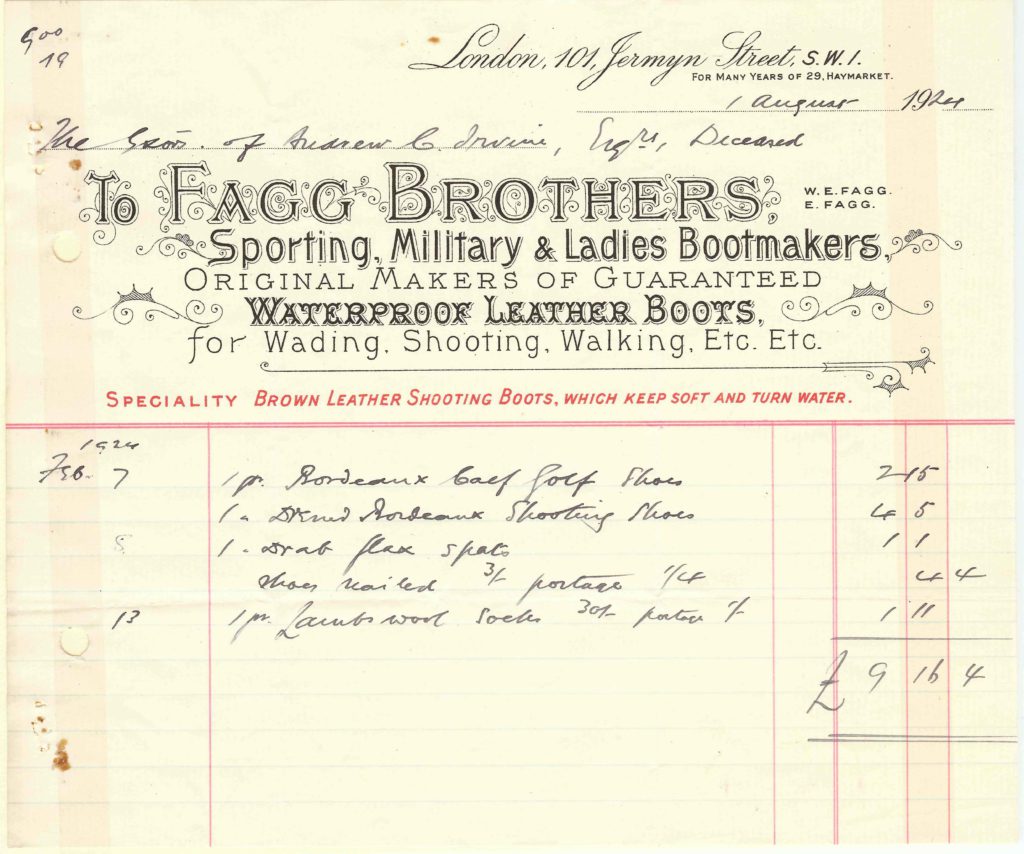
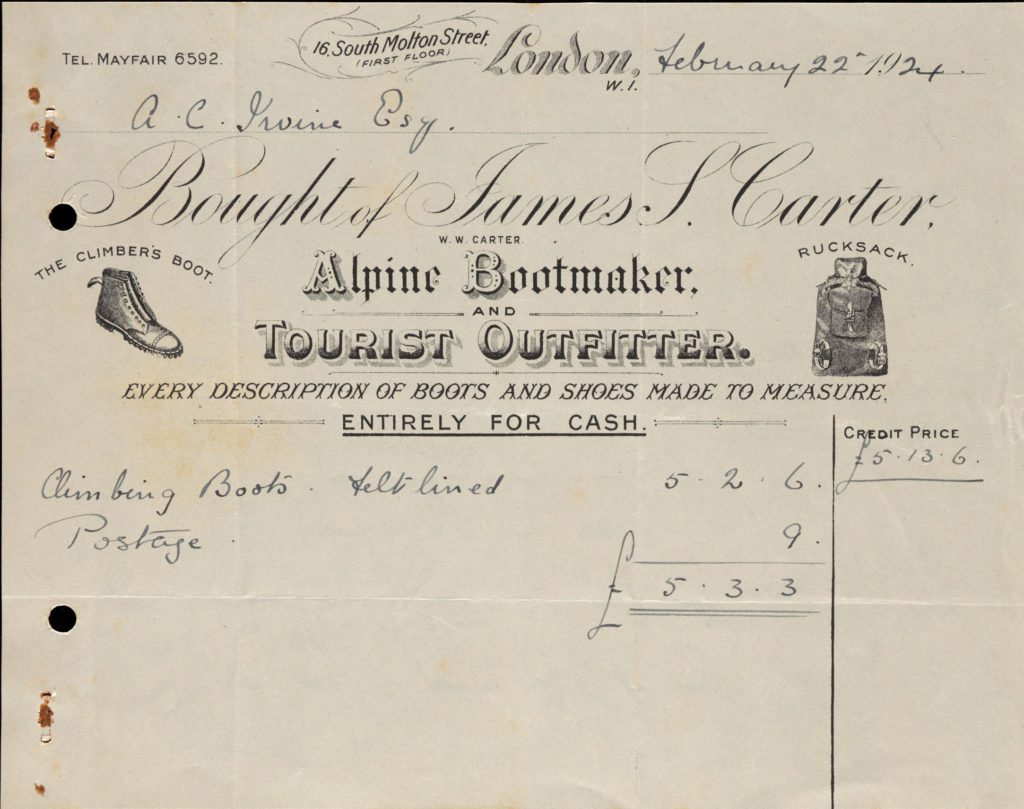
Well, that’s one theory that is well and truly put to bed now. Sandy Irvine’s body was never removed from Everest. That the boot is his, there is no doubt, thanks to the name label on the sock. And just for fun, the invoices for both the boot and the lambswool socks are in the archive of Merton College, Oxford. There is even a photograph of Sandy drying his socks at Shekar Dzong in the collection of the Royal Geographical Society. Sometimes history comes together beautifully, like a perfectly knitted woollen. And it turns out that clothes do matter.

These two images courtesy Sandy Irvine Archive, The Warden and Fellows of Merton College, Oxford