What if …?

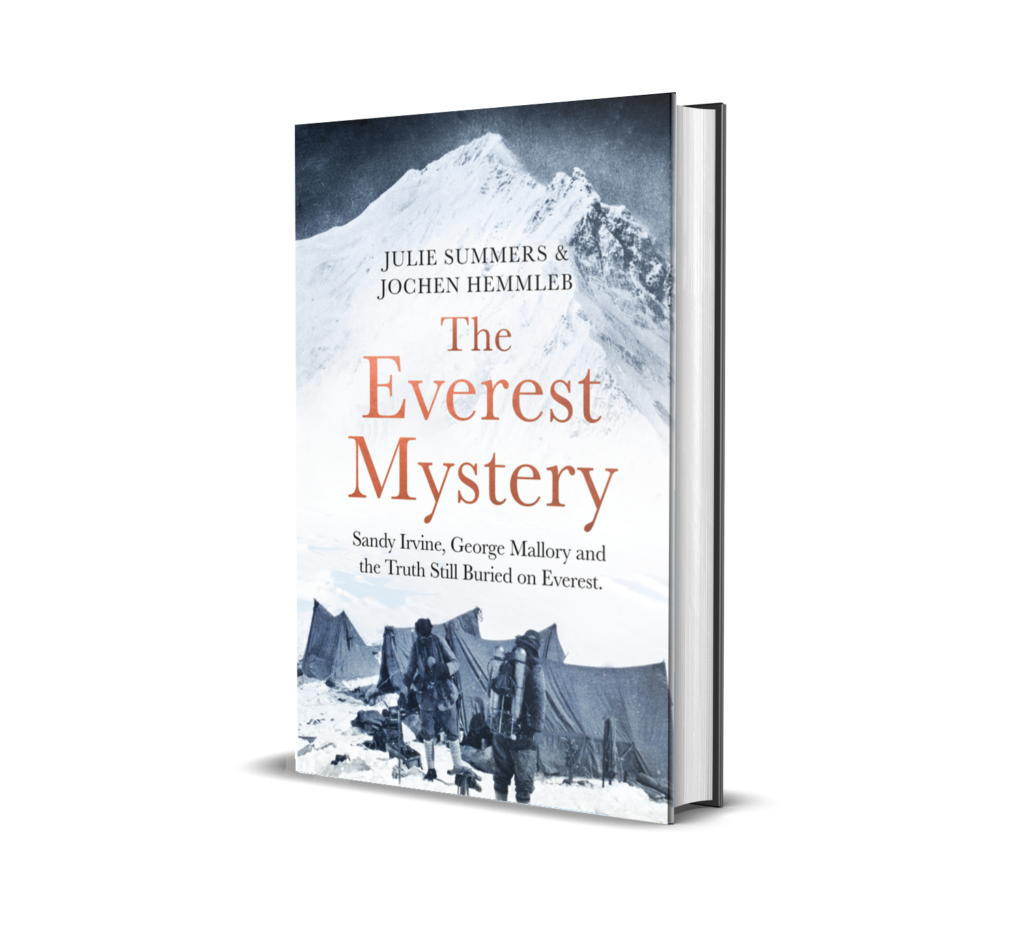
Often it is useless to ask: ‘what if’?’ but I thought I’d indulge in a little speculation as Jochen Hemmleb’s and my book The Everest Mystery is launched in the United States and Canada. Working with Jochen has been a fantastic collaboration and it has left us both with residual curiosity about the fate of Sandy Irvine and George Mallory. For Jochen there are still unanswered questions about the final climb. For me there is an appetite to delve deeper into our research about Sandy’s life and personality and to ask that question: what if he had returned from Everest?

With my knowledge of our family history and with the few hints he dropped in the last year of his life I feel I have some understanding of who he was and what he might have become. Had he returned in 1924 he would have arrived in Britain in August, six weeks before the start of the autumn term at Oxford. If he and Mallory had succeeded in reaching the summit of Everest, they would have become national heroes, and Mallory’s life would have changed out of all recognition. His dream fulfilled, he would have had the fame to make a career out of his success and to give Ruth, his wife, the life she and the children deserved. Sandy, too, would have found fame but it would have been limited by his age and his need to complete his education. The idea of a professional climber or explorer lay years in the future and sponsorship for a lifestyle was not invented until the seventies. Had they not succeeded but nevertheless held the altitude record for this highest climb on Mount Everest to date, that would still have had some impact on their standing.

So either way, summit or not in his bag, Sandy would have come back to Britain and spent most of the summer with his family in Birkenhead or in the Lake District. In October he would have caught the train to Oxford for his final year studying Chemistry at Merton College. His friends would have welcomed him back into the Boat Race squad and he would have been in the running to become president of the all-important Oxford University Boat Club. The crew raced again in 1925 and sank. The weather was atrocious and their boat became waterlogged. Cambridge clocked up yet another victory. I don’t believe Sandy’s presence in the boat or his leadership of the club could have overturned that result, but he would have given it his best.

Sandy Irvine in his rowing scarf, 1923 The Warden & Fellows of Merton College, Oxford

Life after Oxford was always going to be a challenge for Sandy. His love affair with Marjorie was still a live issue. Harry Summers had made it clear he would have to cite Sandy in the divorce proceedings against his wife and that disgrace would have hung heavy over the then twenty-three-year-old. My best guess is that he would have been gently encouraged to leave the country until things died down, not least to avoid bringing embarrassment on his sister, Evelyn, who was about to marry Dick Summers, Harry’s youngest son. So a career abroad might have been an option. George Binney, who had led the Spitsbergen expedition in 1923 and was a friend and fellow Mertonian went to work for the Hudson Bay Company. Sandy might well have found an opening there and with his Everest fame in his pocket he would have been welcomed.
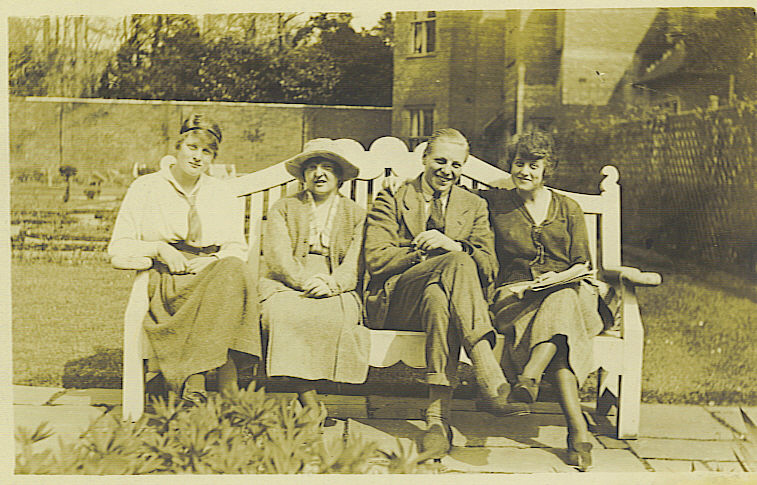
Sandy with Marjorie (right) at Harry Summers’s home, Newbold. Far left is Sandy’s sister, Evelyn, and next to her, Maud Summers, Harry’s daughter and Marjorie’s stepdaughter, April 1923. The Warden and Fellows, Merton College, Oxford

The magnificent landscapes and mountains of Canada and North America would have been a playground for our adventurous spirit. He left us a clue about this in his letter to Arnold Lunn from January 1924 when he wrote: ‘When I am an old man I will look back on Christmas, 1923, as the day when to all intents and purposes I was born. I don’t think anyone has lived until they have been on ski.’ I think that, more than anything else, gives us the clue into his passion for adventure but, and this is important, not necessarily mountaineering. Skiing in North America would have offered him a marvellous opportunity to get into the sport but also to do some proper winter exploration in the back country. Had he been invited to join an expedition to Everest in the late 1920s I suspect he would have accepted. By 1933, when the next British expedition launched, I believe his interests would have moved on elsewhere. He was not a man to look back over his shoulder. It’s just a hunch and Jochen agrees with me.
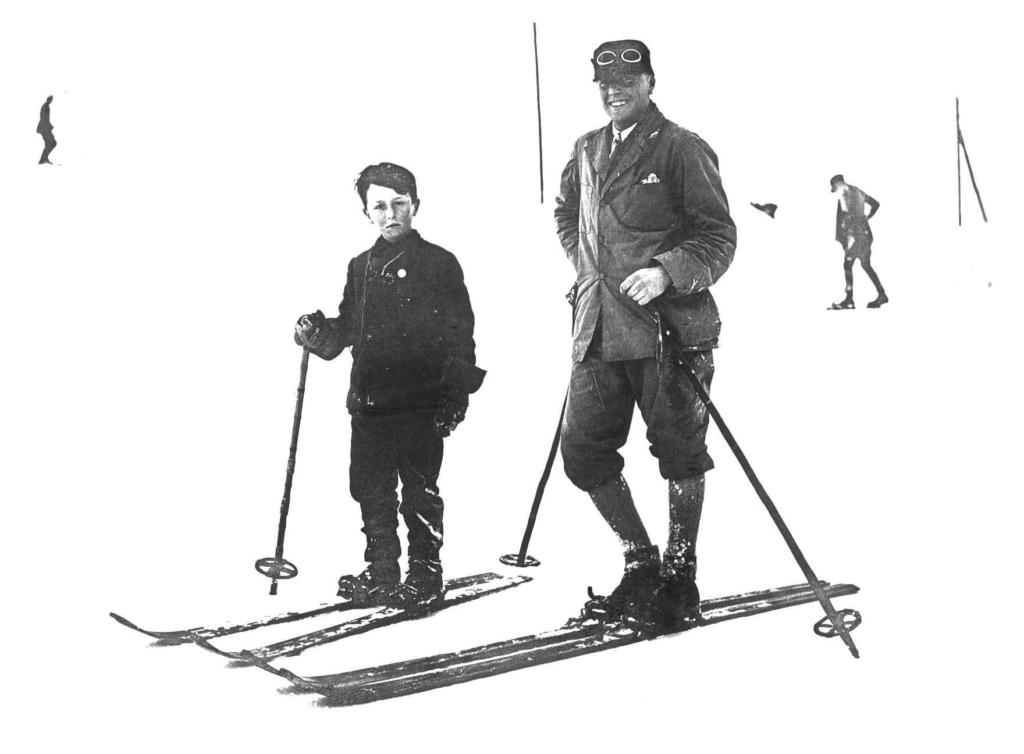
Sandy (right) with nine-year-old Peter Lunn, Murren, Switzerland, January 1924. Peter went on to be an Olympic skier and tested skis for various companies into his nineties. Lunn Family

Of one thing I am confident, Sandy Irvine would have gone on finding engineering solutions to any number of problems. I hope it would have taken him towards a life of invention and investigation because his problem-solving brilliance would have been hugely valuable during the Second World War. I’m fairly sure he would have wanted to come back to Britain to ‘do his bit’ as the expression goes. Harry Summers died in 1940 and it was sixteen years since the scandalous divorce so that would not have been an impediment.
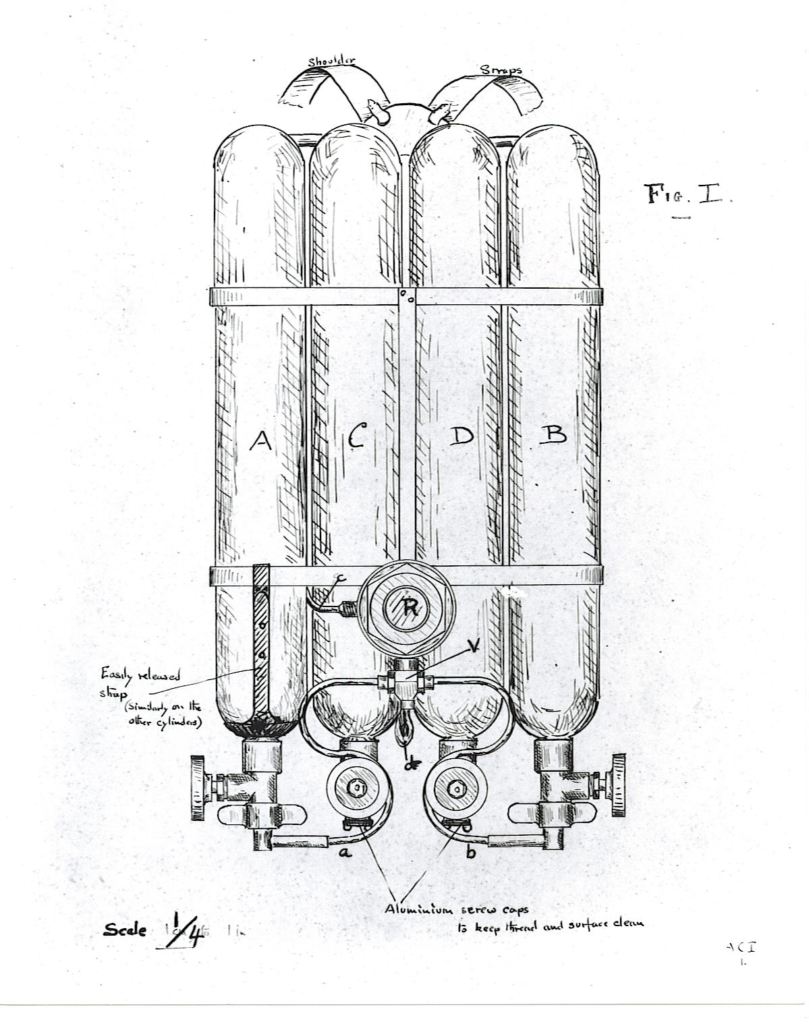
Sandy’s radical redesign of the oxygen apparatus for the 1924 expedition. The Warden and Fellows of Merton College, Oxford

Would Sandy have married? Unlikely but possible. I suspect if he did marry it would not have been to Audrey Pym, his adolescent sweetheart. His life would have led him out of her orbit as he set off west. He would definitely have been the most popular uncle in the Irvine family and one whose stories, told in his quiet manner but accompanied by his twinkling eyes and ready smile, would have enchanted children for many years. After all, his life has done that although it was cut short at twenty-two. Just imagine how many more tales we would have had to enjoy had he lived to become an old man.
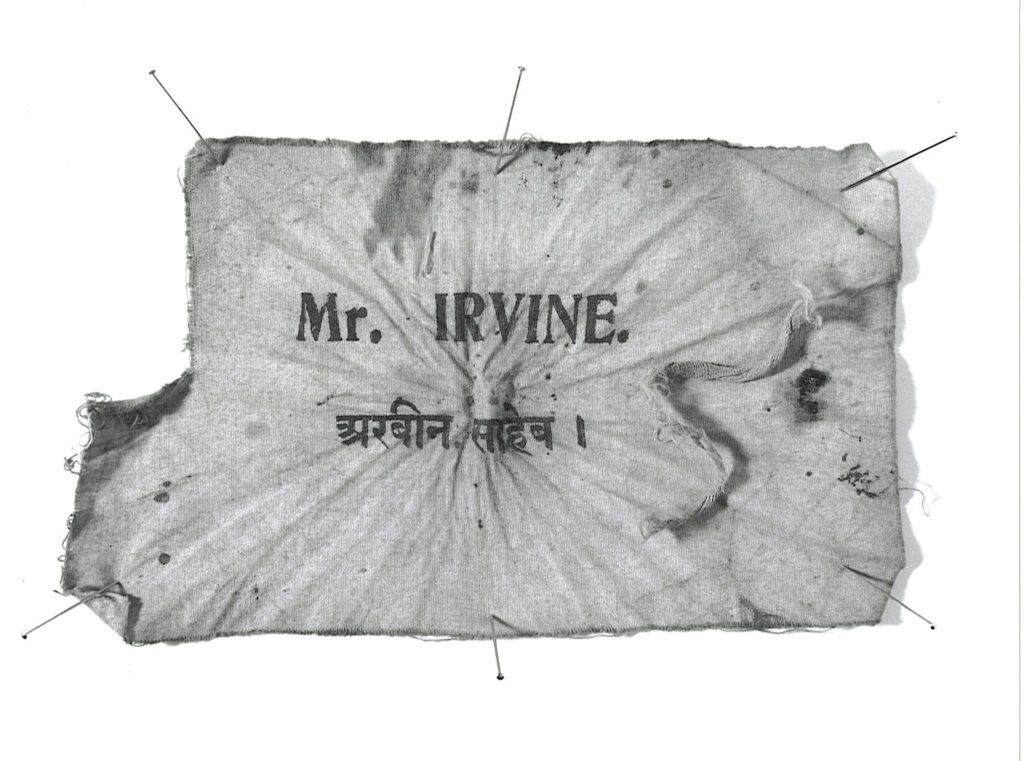
This piece of fabric was sent back to Sandy’s sister, Evelyn, in 1931. In it were 31 garnets collected by Sandy’s sherpa from 1924. The Warden and Fellows of Merton College, Oxford

So while our book is finding its feet on bookshelves in shops, and hopefully homes too, we would like you to imagine that you can get to know Sandy Irvine and perhaps have your own ideas about what might have been had he made it home safely in 1924.
The World of Books

The World of Books

When I wrote my first book over a quarter of a century ago it was a full-on physical process. I typed the manuscript on a word processor, took a floppy disc down to the printers in town and paid cash to have the book printed, double spaced, on eighty-gram paper. Three hundred pages, tied up in string, weighed a hefty two kilos. I parcelled it up in a box and sent it by Royal Mail to my editor at Weidenfeld & Nicolson, Ion Trewin. He sent it back three weeks later with glorious hieroglyphics in the margins indicating where he suggested I make changes. That led to another version of the book, draft two, which went through the same process and was sent back to London a month later only to be returned with the copyeditors tweaks and changes. The next time I sent it back it returned in a huge envelope as galley proofs, those magical A3 sheets that lay out the book, two pages at a time, with trim marks in the four corners to show you how big the book will be. As they are so large, galleys are usually folded in half, not with a crease but simply turned over on themselves so they have a glorious undulating shape when you unfold them. Galleys never cease to enchant me. When the book finally arrived through my letter box in October 2000, I held in my hands a solid object which was the sole product of nearly three years of hard work.

Fast forward almost twenty-six years and the whole process of book production and consumption has changed. The research has moved on too, with online access to so much material, some of it highly unreliable, but the writing process for me has not changed. This time, however, I had a co-author, the Everest historian Jochen Hemmleb. He and I fortunately work in a similar manner. I still type my first draft in the same way and I edit now, as I did in the late 1990s, by hand. But once I have made my changes and sent the manuscript off, by pressing ‘send’ on my email, the steps that once bore the idiosyncratic marks of an individual editor now are marked electronically with tracked changes. It is still a creative process, and I love working with editors, proof-readers and, particularly indexers but I do miss the galleys.

There are new steps in book publishing now which have slipped in organically. The first is the e-book which captures between 20 and 30 per cent of the market depending on whether the book is fiction or non-fiction. The second is the audiobook. This accounts for somewhere between 9 and 12 per cent of sales and is a growing market. Several of my books have been turned into abridged or dramatized audio versions in the past but only two are full-length audiobooks. A recent conversation with a friend, Helen, who had listened to one of my books and found it less than satisfactory, led me to reading The Everest Mystery myself rather than choosing a professional reader. It seemed a bit arrogant to assume I would be able to do it but with a little help from some wonderful friends, I took it on. Over the course of three days in late March, I recorded nine hours and fifty-two minutes of audio with a producer called Dan who took me patiently through the whole process.

Mindful of Helen’s criticism of pronunciation of foreign words and general delivery, I decided to take some advice. First stop was a tutorial with professional voice coach, Elspeth Morrison, who happens to be one of my oldest friends. We were at school together. I recorded an excerpt for her and she critiqued it, which was brilliantly bruising. She also gave me tips on how to warm my voice up, how to look after it so that it didn’t get tired (don’t talk too much), what to drink and eat, and how to sound as natural as possible. That was the most difficult bit, after not talking too much.

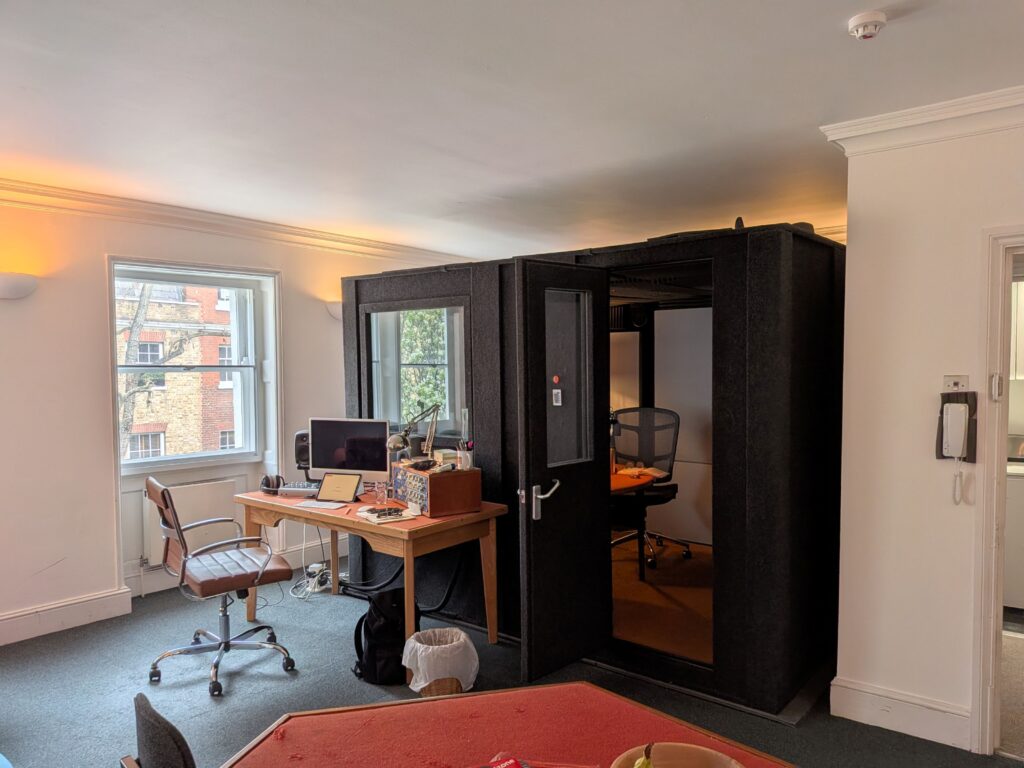
The Studio in Soho
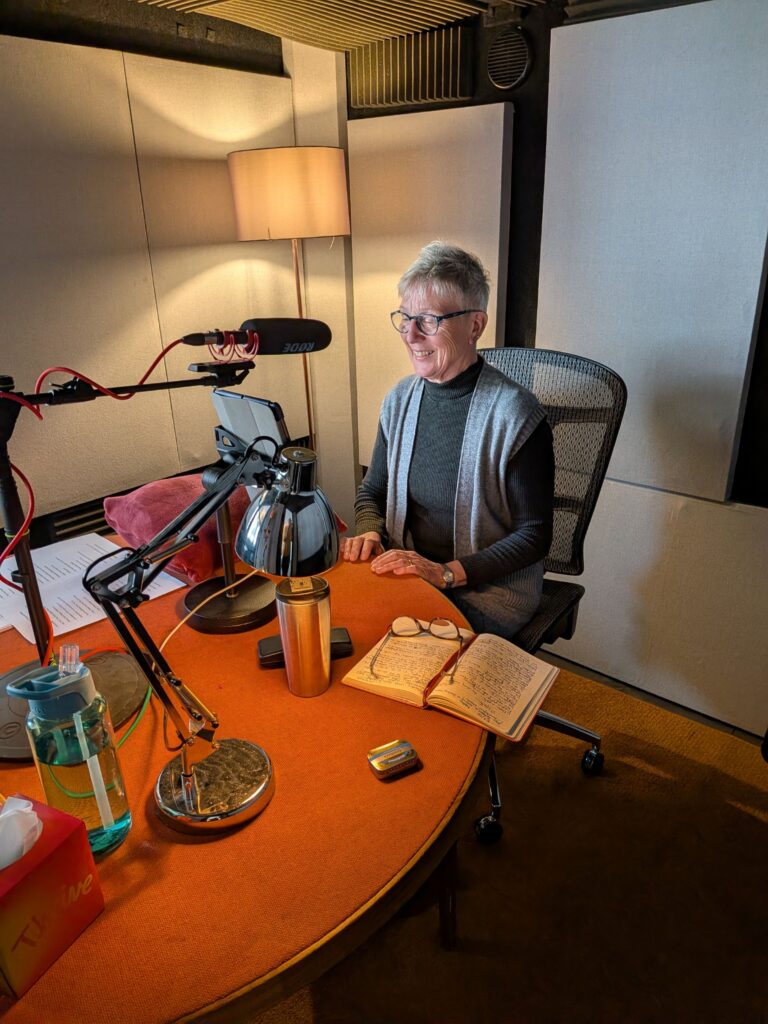
My home for two and a half days in March. Spot the cushion on my right and the long list of difficult to pronounce names

The Everest Mystery, it turns out on closer inspection, has names in over a dozen languages, including Chinese, Tibetan, Russian and two texts in Latin. Should the Latin be read in the style of the 1920s or in today’s Latin my friendly classics professor from Oxford asked me? That is when I realised I had to take this seriously. With thirty-seven Tibetan names I needed help. Oxford is full of brilliant academics who are generous with their time, and I found Ulrike Roesler, Professor of Tibetan and Himalayan Studies in the Faculty of Asian and Middle Eastern Studies who coached me not only on pronunciation but on the meaning of names. It was fascinating and quite moving to learn about the way Tibetan names arise. Then I had to turn to Chinese, which I found a lot trickier. My nephew is married to a Chinese woman, Lily, who was only too pleased to teach ‘Auntie Beetle’, as I am known, to pronounce names like Luoze, Qu Yinhua and Wang Fuzhou. I suspect she will hear very western versions of the names if she listens to the recording, but I did my best. I surprised the producer by being able to pronounce Ffordd Ddwr and Llandyrnog convincingly. A lifetime of listening to my late father enunciate Welsh names helped greatly in that respect and was a lovely reminder of his phenomenal linguistic abilities.

Any excuse to show a photograph of my wonderful father, Peter

Once settled in the studio in Soho, I set out the tools of my trade for the day: a flask of peppermint tea, a bottle of warmish water, cough sweets and a cushion to place over my tummy to stop any unwanted gurgling interfering with the recording. The studio was a soundproof box with a chair, an iPad and a microphone. Stage fright wasn’t an option. I just had to get on with it. It all went swimmingly until I ate a chocolate ginger biscuit in a break and developed a horrible dry cough. Dan handed me a banana, forbade chocolate from then on, and told me to slow down. Over the next three days I read my way through the book from beginning to end, my cheat sheet of tricky words by my side. By lunchtime on the third day, I had finished the epilogue. All that remained were the credits for the UK and US editions. I stepped out into the spring sunshine and made my way to Euston station, only to find it closed. I would have shouted with rage, but I had lost my voice.